Drive In Racking Pros & Cons: Is It Right For You?
The Honest Truth About Drive In Racking & Drive In Pallet Rack Systems
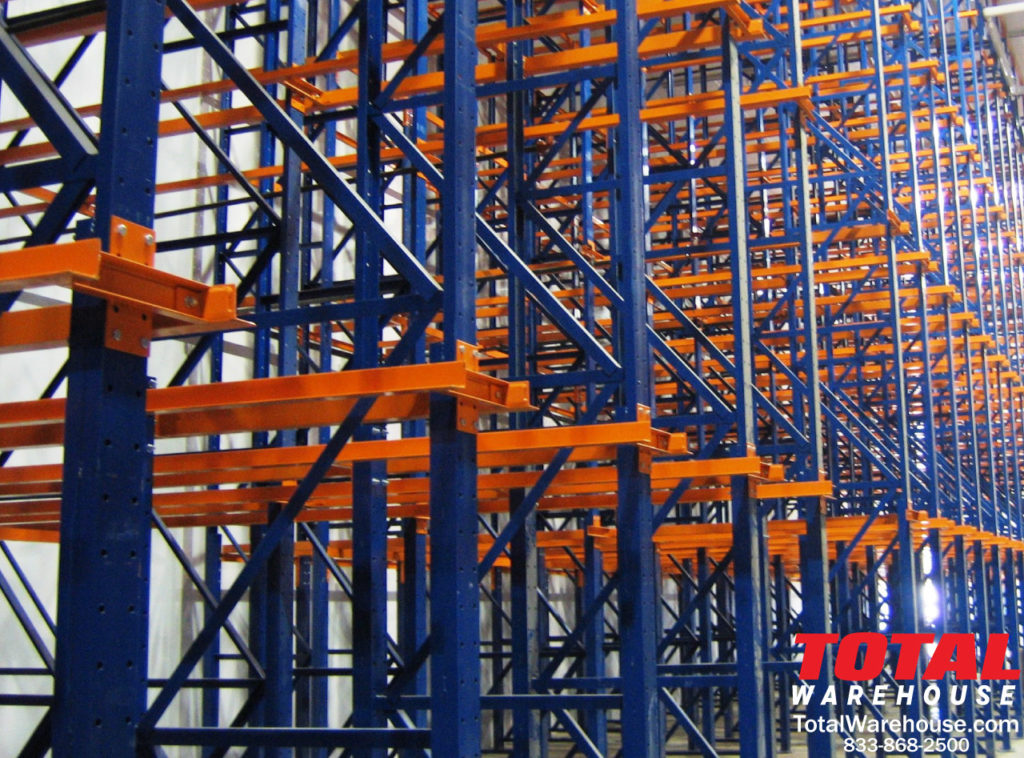
Navigating a forklift into a deep-lane configuration requires a level of precision that distinguishes seasoned operators from the rest. With structural rails positioned just inches from the overhead guard and heavy inventory suspended above, the environment demands absolute focus. Yet, this aggressive utilization of vertical space is precisely why drive in racking remains a dominant solution in high-volume logistics.
Industrial real estate availability is tightening, and the cost per square foot continues to climb. This pressure is compounded in cold storage and freezer applications, where the cost to condition empty air is financially unsustainable. To maintain profitability in these environments, maximizing volumetric efficiency isn’t just an option—it is an operational necessity. This is where drive in pallet rack systems prove their worth.
Table of Contents
Key Takeaways
- Best For: High-density storage of similar SKUs (Last-In, First-Out).
- Cost: One of the most affordable high-density options available.
- Risk: Higher potential for forklift impact damage than selective rack.
- Efficiency: Increases storage capacity by up to 75% over standard racking.
What Exactly is Drive-In Racking?
Let’s strip away the brochure talk. Drive in pallet rack is essentially a cave made of steel. Unlike selective racking where you have aisles between every row, this system eliminates aisles. You drive your lift truck directly into the rack structure to place or retrieve a pallet.
You aren’t stacking pallets on top of each other (like floor stacking). You are sliding them onto horizontal rails that run the depth of the lane. It looks like a honeycomb.
- Eliminates the need for service aisles between every row.
- Utilizes the full volume of your warehouse, not just the floor area.
- Ideal for storing massive amounts of the same SKU.
- Rails support the pallet, so the bottom pallet doesn’t get crushed by the weight of the top ones.
- Requires a standard forklift, though reach trucks often struggle here due to the outriggers.
I have seen facilities go from overflowing to 40% empty space just by switching to this setup. If you have 500 pallets of the exact same widget, why do you need to access every single one instantly? You don’t. You just need the next one in line.
| Feature | Description | My Rating |
|---|---|---|
| Storage Density | Extremely high. Eliminates up to 7-8 aisles. | 9/10 |
| Selectivity | Very low. You can only reach the front pallet. | 3/10 |
| Cost per Pallet | Lower than push-back or pallet flow. | 8/10 |
| SKU Suitability | Best for low-mix, high-volume products. | Specialized |
The Mechanics: How It Actually Works
This system operates on LIFO. That stands for Last-In, First-Out. Think of it like a Pez dispenser, but for pallets. The last pallet you load into the lane is the first one you have to take out.
Here is the reality of operating it:
- The driver lines up the truck perfectly with the bay.
- They lift the load to the rail height before entering.
- They drive in slowly. Painfully slowly if they are new.
- They lower the pallet onto the rails and back out.
- The catch: If you need the pallet way in the back, you have to move everything in front of it first.
This is where I see people mess up. They install this system for products that expire quickly (perishables) without a strict inventory management system. If you bury a pallet of yogurt in the back and forget about it, you are going to find a science experiment three months later. Only use drive in racking for goods that don’t spoil fast or rotate extremely quickly.
The Good and The Bad (No Fluff)
I’m not here to sell you racking; I’m here to tell you what happens on the floor. Drive in racking is a double-edged sword. When it works, it prints money by saving space. When it’s wrong, it halts operations.
The Wins
- Massive Footprint Savings: You can double your storage in the same square footage.
- Cost Effective: Compared to dynamic systems like Pallet Flow (which uses gravity rollers and brakes), this is just steel. No moving parts to break.
- Protection: Product isn’t stacked on top of product, so less crushing damage.
- Energy Bills: In freezers, a smaller building footprint means less air to cool. That saves thousands a year.
The Frustrations
- Honeycombing: This is a warehouse term. It means you have empty slots deep in the lane that you can’t fill because there is product in front of them. It kills your effective utilization.
- Forklift Damage: I have never seen a drive in pallet rack system that didn’t have a banged-up upright. Drivers are human. They will hit the frames.
- Speed: It is slower to load/unload than selective rack because the driver has to drive into the structure.
Honest opinion: If you have high turnover and sloppy forklift drivers, do not buy this. You will spend more on upright repairs than you saved on the racking.
| Scenario | Drive-In Good? | Why? |
|---|---|---|
| Seasonal Items | YES | Store Christmas decor all year, pull it all out at once. |
| Food (Short Shelf Life) | NO | Risk of stock rotation failure (LIFO issues). |
| General Merch (High Mix) | NO | You’ll spend all day moving pallets to get to the one you need. |
| Cold Storage | YES | Maximizes expensive refrigerated space. |
Safety: Don’t Ignore This Part
Safety in these systems keeps me up at night. You are putting a heavy machine inside a static structure. The margin for error is usually about 2-3 inches on either side.
Here is what you need to mandate:
- Floor Guide Rails: These are heavy steel angles bolted to the floor. They physically stop the forklift wheels from hitting the uprights. Invest in these. Do not skip them to save a buck.
- High-Visibility Upright Guards: Make the entrance columns bright yellow or orange.
- Driver Training: You cannot throw a rookie into a deep-lane system. They need specific training on entering and backing out straight.
- Regular Audits: Walk the aisles. Look for bent metal. A compromised upright in a high-density system can lead to a progressive collapse—domino style.
Comparing the Alternatives
Sometimes people ask for drive in pallet rack when they actually need something else. Let’s look at the cousins of this system.
Drive-Through Racking
Same concept, but accessible from both sides. This allows for FIFO (First-In, First-Out) if you load from one side and pick from the other. Requires an aisle on both ends, so you lose some density.
Push Back Racking
This is my personal favorite for many clients. You put the pallet on a cart on rails. When you load the next one, you push the first one back. When you unload, gravity brings the back ones forward. It’s faster than drive-in because you don’t enter the rack, but it costs more per pallet position.
| System Type | Access Speed | Cost | Space Usage |
|---|---|---|---|
| Drive-In | Slow | $$ | High |
| Push Back | Fast | $$$ | Medium-High |
| Selective | Fastest | $ | Low |
| Pallet Flow | Medium | $$$$ | High |
Conclusion
Drive-in systems are the workhorses of bulk storage. They aren’t fancy, and they aren’t forgiving, but they get the job done when you are tight on space. If you have uniform products and a tight budget, this is your solution.
Just remember: don’t skimp on the safety guards, and train your drivers until they can back out of a lane in their sleep. Your rack (and your insurance premiums) will thank you.
Got a horror story about a bent upright or a creative way you maximized your lanes? Drop a comment below or reach out to us. Let’s optimize that warehouse.
Common FAQs
What is the main difference between drive-in and drive-through racking?
Drive-in racking has one entry point and uses a LIFO (Last-In, First-Out) inventory method, meaning the last pallet loaded is the first accessible. Drive-through racking is open at both ends, allowing forklifts to enter from either side, which facilitates a FIFO (First-In, First-Out) system but requires an additional aisle.
How much weight can a drive in pallet rack hold?
Industry standards dictate that capacity depends on the beam and upright specifications, but typical drive-in lanes can support 2,000 to 3,000 lbs per pallet position. However, the total bay load can exceed 25,000 lbs depending on the height and bracing. Always consult the manufacturer’s load plaque.
Can I use any forklift with drive in racking?
No, standard counterbalance forklifts are most common, but you must verify the truck’s overhead guard width against the lane width. Reach trucks with wide outriggers often cannot function in drive-in systems because the outriggers will hit the bottom rails or uprights.
Is drive in racking safe for all pallets?
Good condition GMA pallets are required because the pallet rests on side rails rather than a full beam. Weak, broken, or undersized pallets can deflect or snap, causing the load to fall through the rails. Always use Grade A or new pallets.
What is ‘honeycombing’ in warehouse storage?
Honeycombing refers to the empty pallet positions that cannot be utilized in a deep lane system. It happens when you don’t have enough of the same SKU to fill a whole lane, leaving deep slots empty behind the front pallets, wasting vertical space.
How deep should my drive in lanes be?
Optimal depth is usually 2 to 10 pallets deep. Going deeper than 10 pallets often leads to severe honeycombing (wasted space) and lower throughput unless your inventory turns over very rapidly.
Does drive in racking require floor anchors?
Yes, OSHA and RMI specs require all rack columns to be anchored to the concrete floor. This is especially critical in drive-in systems due to the higher risk of forklift impact and the lack of horizontal beams at the lower levels.
Why is LIFO a disadvantage for food storage?
LIFO (Last-In, First-Out) makes stock rotation difficult because the oldest product is trapped in the back. For perishable goods with expiration dates, this increases the risk of spoilage unless the entire lane is emptied completely before refilling.
How do I repair damaged drive in uprights?
Do not attempt DIY repairs like welding or heating. You should use an engineered rack repair kit that bolts or welds onto the column after removing the damaged section, or replace the upright entirely. All repairs must meet the original load capacity rating.
Is push-back racking better than drive-in?
If you need speed and selectivity, yes. Push-back racking offers similar density but allows each level to store a different SKU, reducing honeycombing. However, drive-in is significantly cheaper per pallet position if budget is the primary driver.