Essential Material Handling Equipment Every Warehouse Needs
Key Takeaways
| Topic | Key Points |
|---|---|
| What is material handling equipment? | Any device or machine used to move, store, control, or protect goods within a facility |
| Four main categories | Storage and handling equipment, industrial trucks, bulk material handling, engineered systems |
| Popular forklift types | Reach trucks, turret trucks, order pickers, pallet jacks, walkie stackers |
| Top benefits | Improved safety, higher productivity, cost control, and stronger employee morale |
| Major challenges | High upfront costs, operator training, maintenance, and matching equipment to workflow |
| Choosing equipment | Assess operational needs, compare equipment types, invest in training, and balance automation with skilled labor |
Introduction
Over 21% of workplace injuries stem from material handling mishaps. Material handling equipment is the real MVP for warehouse pros who want smooth workflow and happy staff. Choosing the right equipment is about more than moving things; it’s about building a safe, productive, and cost-friendly environment.
I’ve been in the trenches with forklifts, picked more orders than I can count, and—true story—once watched a robot arm glitch, drop chips everywhere. That’s why I’m breaking down what actually works, what can trip you up, and how the right material handling equipment will save your back, your wallet, and your reputation.
What Is Material Handling Equipment? | Benefits & Uses
Material handling equipment covers any machine, tool, or system that helps move, store, or protect materials within an operation. It’s everywhere—think shelves for stacking boxes, forklifts whizzing across a dock, or automated robots sorting packages faster than any human.
-
Addresses movement, storage, control, and protection of goods
-
Used in manufacturing, warehousing, logistics, agriculture, wholesale and retail
-
Includes both simple manual tools and high-tech robots
-
Key win: Reduces workplace injuries and product damage
-
Common mistake: Not matching equipment to items—moving loose grain with a forklift is a bad idea!
Benefits
-
Boosts productivity, less downtime from manual labor
-
Slashes costs by cutting product damage, reducing labor hours
-
Makes workers’ lives better—less lifting = less griping at break time
Downsides
-
Upfront costs? Ouch—a finance headache
-
Frequent operator training required
-
Skip maintenance, and you’ll pay later; once cost me a truck on the busiest shipping day
Storage and Handling Equipment | Get Organized Without Losing Your Mind
Before any facility can be productive, it needs solid storage and handling gear. The basics include bins, storage racks, mezzanines, and pallet stacking frames. I thought shelving was “set and forget” until we lost a box of widgets for three days—that taught me to never underestimate good organization.
-
Bins: Store small goods for easy grabbing
-
Drawers: For denser storage of small tools or inventory
-
Mezzanines: Add a floor between the ceiling and floor, doubling usable space
-
Pallets: Make any load easy to haul or stack
-
Pallet Stacking Frames: Let you go vertically, reducing clutter
-
Storage Racks: Boost vertical storage and accessibility
-
Storage Containers: Ship larger items, ideal outdoors
Benefits & Pitfalls
-
Saves space, maximizes each square foot
-
Can lead to clutter if not labeled properly
-
Easy to install and rearrange
-
Skimp on bins and racks, expect chaos and delays
Industrial Trucks and Forklifts | Pros, Cons & Best Forklift Types
| Forklift Type | Best For | Pros | Cons |
|---|---|---|---|
| Standard Warehouse Forklifts | General warehouse, heavy lifting | Reliable, high capacity, easy to use | Large turning radius |
| Reach Trucks | Tall shelves, deep storage | Max vertical space, deep reach | Challenging to maneuver in small spaces |
| Turret Trucks | Narrow aisles, dense stacking | Pivots/flexible, works in tight spots | Sensitive controls, uneven floors |
| Order Pickers | Order fulfillment, high racks | Quick picking, ergonomic | Lower load capacity |
| Pallet Jacks | Short moves, loading docks | Simple, inexpensive, low-maintenance | Limited lift height |
| Walkie Stackers | Small warehouses, light loads | Compact, agile | Low capacity, operator exposed |
Material handling gets real when you’re rolling—industrial trucks are the backbone of dynamic warehouse logistics. With so many types—each with its own quirks—I’ve personally gotten stuck, tipped, or run over my share of orange cones. Here’s the deal:
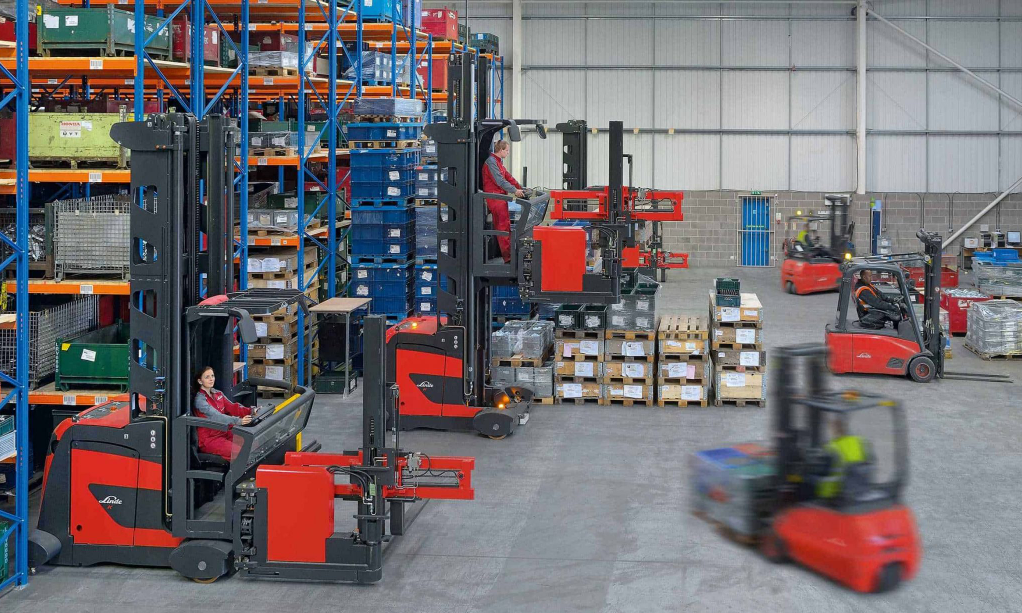
Industrial trucks include both manual and motorized devices, ranging from simple pallet jacks to advanced electric forklifts and specialty vehicles. These tools are critical for moving heavy or bulk items, especially in tight warehouse layouts. I’ve seen an automated order picker change the entire pace of a shift, but I’ve also seen a rookie damage a reach truck on day one (it was awkward).
Major Forklift Types
Let’s get specific—here’s what sets each apart and where they shine:
-
Standard Warehouse Forklifts: Most common; move heavy loads up to 5,000 lbs, lift 10-15 feet; reliable and straightforward; ideal for typical warehouse settings.
-
Reach Trucks: Designed for heightened storage areas; extend forks for deep shelf access; awkward to drive in small spaces but perfect for tight aisles and high racking. Useful for maximizing vertical storage in tall warehouses.
-
Turret Trucks: Master of narrow aisles; pivoting forks reach high and deep; great for maximizing storage, but can be a headache if floors aren’t flat. Not a beginner’s ride! Perfect in high-density storage.
-
Order Pickers: Raise operators to grab or restock items from high shelves; low-medium weight capacity, but maximize picking speed. I’ve watched these make e-commerce order fulfillment a breeze.
-
Pallet Jacks (Manual/Electric): Transport one or two pallets at a time; basic, but essential; manual version is budget-friendly, electric is easier on the back.
-
Walkie Stackers: Stand-behind models; limited lift and load, but perfect for smaller operations with less space.
Benefits
-
Drastically boosts movement speed and reduces muscle strain
-
Handles loads at all scales—huge slabs, little bins, delicate products
-
Adds flexibility; mix manual and electric units for tailored workflows
Downsides
-
Pricey, especially for specialty trucks (turret, reach models)
-
Operators must be trained (and retrained)
-
Maintenance can get expensive—parts, batteries, hydraulic fluid
Pro Tips & Mistakes
| Forklift Type | Best For | Pros | Cons |
|---|---|---|---|
| Standard Warehouse Forklifts | General warehouse, heavy lifting | Reliable, high capacity, easy to use | Large turning radius |
| Reach Trucks | Tall shelves, deep storage | Max vertical space, deep reach | Challenging to maneuver in small spaces |
| Turret Trucks | Narrow aisles, dense stacking | Pivots/flexible, works in tight spots | Sensitive controls, uneven floors |
| Order Pickers | Order fulfillment, high racks | Quick picking, ergonomic | Lower load capacity |
| Pallet Jacks | Short moves, loading docks | Simple, inexpensive, low-maintenance | Limited lift height |
| Walkie Stackers | Small warehouses, light loads | Compact, agile | Low capacity, operator exposed |
-
Don’t let rookies hop on a reach truck out of curiosity
-
Test-drive different truck types across your actual warehouse before buying
-
Keep extra batteries for electric models on hand, always
Bulk Material Handling Equipment | When Loads Get Messy
Moving grains, minerals, or millions of widgets needs a different touch. Bulk handlers are found in everything from farms to big-box warehouses, and they have seriously saved my back more than once.
It’s all about moving, storing, and automating flow for big quantities—think conveyor belts trundling packages or silos stuffed with product. One lazy maintenance day? Conveyor jammed, and the whole line was angry at me.
-
Conveyors: Belts/pulleys for massive, efficient movement
-
Bucket Elevators: Move bulk vertically (grain, fertilizer)
-
Dump Trucks: Haul debris or bulk, great for build and teardown
-
Hoppers: Store/discharge farm and industrial products
-
Stackers/Reclaimers: Automate piling and retrieving bulk stock
-
Silos: High-volume vertical storage, low footprint
-
Bulk Handling Cranes: Specialized grabs for ore, coal, minerals
Bulk Handling Wins & Failures
-
Like insurance for high-volume throughput
-
Maintenance critical—blockages mean big downtime
-
Built for repetitive, massive loads
Engineered Systems | Automation, Precision, Fewer Headaches
Automation takes the cake for modern warehouse efficiency. Having robots do the heavy lifting, sorting, and moving can triple productivity—or frustrate the heck out of you if it fails.
Engineered systems tie together robotics, sensors, and inventory software for streamlined movement and storage. I’ve seen automated guided vehicles zip around all day; once, an AMR almost ran over my sandwich. These systems are best in high-volume, predictable settings.
-
Automated storage/retrieval (AS/RS): Puts/pulls goods in high-bay storage
-
Automated guided vehicles (AGVs): Self-propelled, follow mapped routes
-
Autonomous mobile robots (AMRs): Smarter, flexible navigation, adapt to obstacles
-
Palletizers: Automatically stack goods
-
Sortation systems: Route goods by type/destination
-
Warehouse robots: Replace manual pickers for repetitive tasks
Automation Pros & Cons
-
Unmatched efficiency, precision, speed
-
High sticker price, needs specialized maintenance
-
Mean less hands-on labor, but skills must shift to tech support
Common FAQs
What is material handling equipment?
Material handling equipment means any tools or machines made to move, store, or control goods in a facility.
What types of forklifts exist?
Standard warehouse forklifts, reach trucks, turret trucks, order pickers, pallet jacks, and walkie stackers are the most common types.
Which truck’s best for tight spaces?
Reach trucks and turret trucks shine in tall, narrow-aisle warehouses.
Are forklifts expensive?
Yes, especially if going for electric, high-lift, or specialty models—budget for training, too!
Which industrial truck for beginners?
Manual pallet jacks or walkie stackers—simple, safe, smaller learning curve.
Common storage mistakes?
Ignoring labeling, buying the wrong rack size, underestimating vertical space.
Automated systems worth it?
For large operations, definitely. For smaller sites, mix manual and basic automation.
Bulk handling: when’s it right?
Always for loose goods or when throughput is top priority.
Any time-saving tips for storage?
Use mezzanines, label all bins, revisit layouts every six months.
How to avoid breakdowns?
Regular checks, preventive maintenance, keep spare parts handy.
Conclusion | Why Material Handling Equipment Still Matters
Trust me, getting your material handling equipment right is the magic sauce for any operation that moves stuff—big or small. I’ve watched warehouses transform (or flounder) based on equipment choices. Take time to match gear to needs, invest in training (it pays off!), and don’t chase every automation fad—sometimes old-school just works better.
Summary Table
| Forklift Type | Best For | Pros | Cons |
|---|---|---|---|
| Standard Warehouse Forklifts | General warehouse, heavy lifting | Reliable, high capacity, easy to use | Large turning radius |
| Reach Trucks | Tall shelves, deep storage | Max vertical space, deep reach | Challenging to maneuver in small spaces |
| Turret Trucks | Narrow aisles, dense stacking | Pivots/flexible, works in tight spots | Sensitive controls, uneven floors |
| Order Pickers | Order fulfillment, high racks | Quick picking, ergonomic | Lower load capacity |
| Pallet Jacks | Short moves, loading docks | Simple, inexpensive, low-maintenance | Limited lift height |
| Walkie Stackers | Small warehouses, light loads | Compact, agile | Low capacity, operator exposed |
Sources:
BigRentz. “4 Types of Material Handling Equipment and Their Uses.” BigRentz Blog, 24 May 2023.
OneMonroe. “Material Handling: Importance, Benefits, and Equipment.” OneMonroe, 2024.
Eastern Lift Truck. “Benefits of Material Handling Equipment Solutions.” Eastern Lift Truck, 2023.