Forklift Asset Management Systems: Tracking Benefits for Fleets
By Total Warehouse
July 30, 2024•3 min read
Benefits of Forklift Tracking Systems for Asset Management and Maintenance
“Forklift tracking” means different things depending on the audience. On the floor it might answer, “Who’s operating truck #4?” At the management level it might answer, “What’s our fleet productivity across sites?”
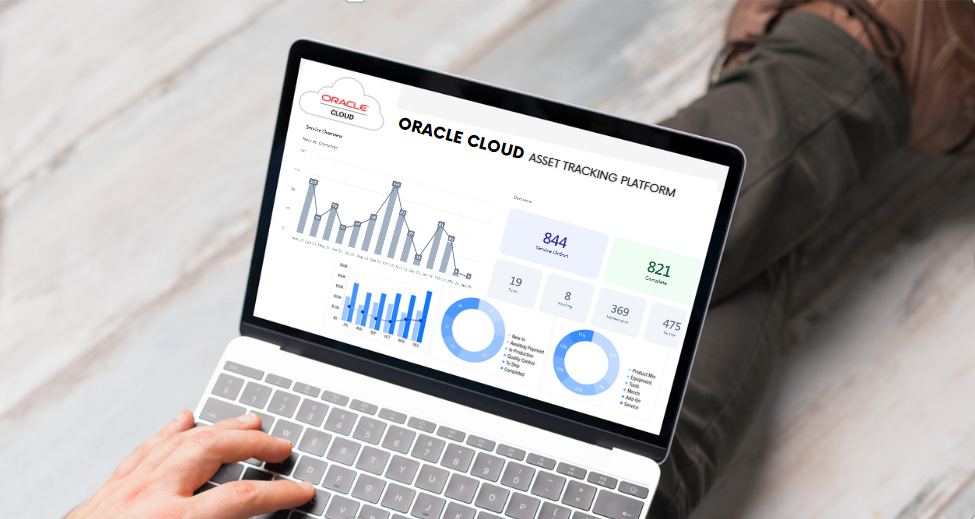
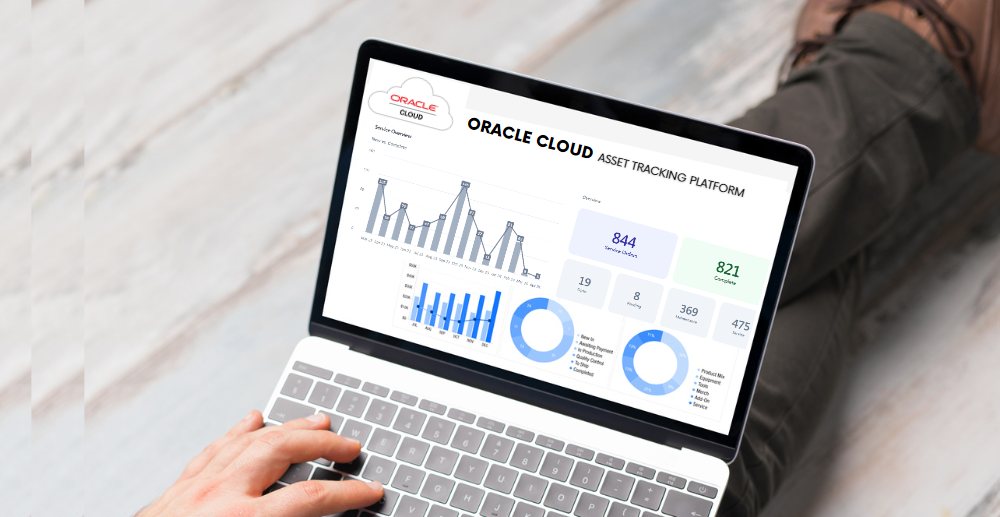
For this discussion, forklift tracking is a combined hardware + software management system that delivers performance and cost insight into forklift assets—including the trucks, personnel, parts, and workflows tied to them.
Key Components of Forklift Tracking Systems
A practical system usually includes four building blocks:
Forklifts — The assets themselves, regardless of age, style, fuel type, or duty cycle.
Telematics hardware — Onboard devices that capture real-time functional, performance, and operator data and report it to software.
Telematics software — Stores and surfaces per-truck data such as operating hours, operator uptime, charging time, system health, and maintenance notifications.
Forklift fleet management software — Rolls truck-level data into management views: operating costs, maintenance needs, KPIs, and decision support.
Together, these components turn field data into analytical information you can act on. At a high level, a solid tracking setup helps answer:
What is the total cost of ownership (TCO) of my forklift fleet?
Where are the bottlenecks and risks?
Where are the opportunities to improve?
How do we drive better fleet KPIs?
What tactical moves avoid immediate issues?
What strategic moves optimize long-term fleet performance?
Some systems allow manual data entry in place of hardware and telematics. That path can work, but it is more prone to gaps and inaccuracies. Ideally, a comprehensive solution includes all of the components above.
Benefits for Asset Management
Tracking that supports asset care typically helps you:
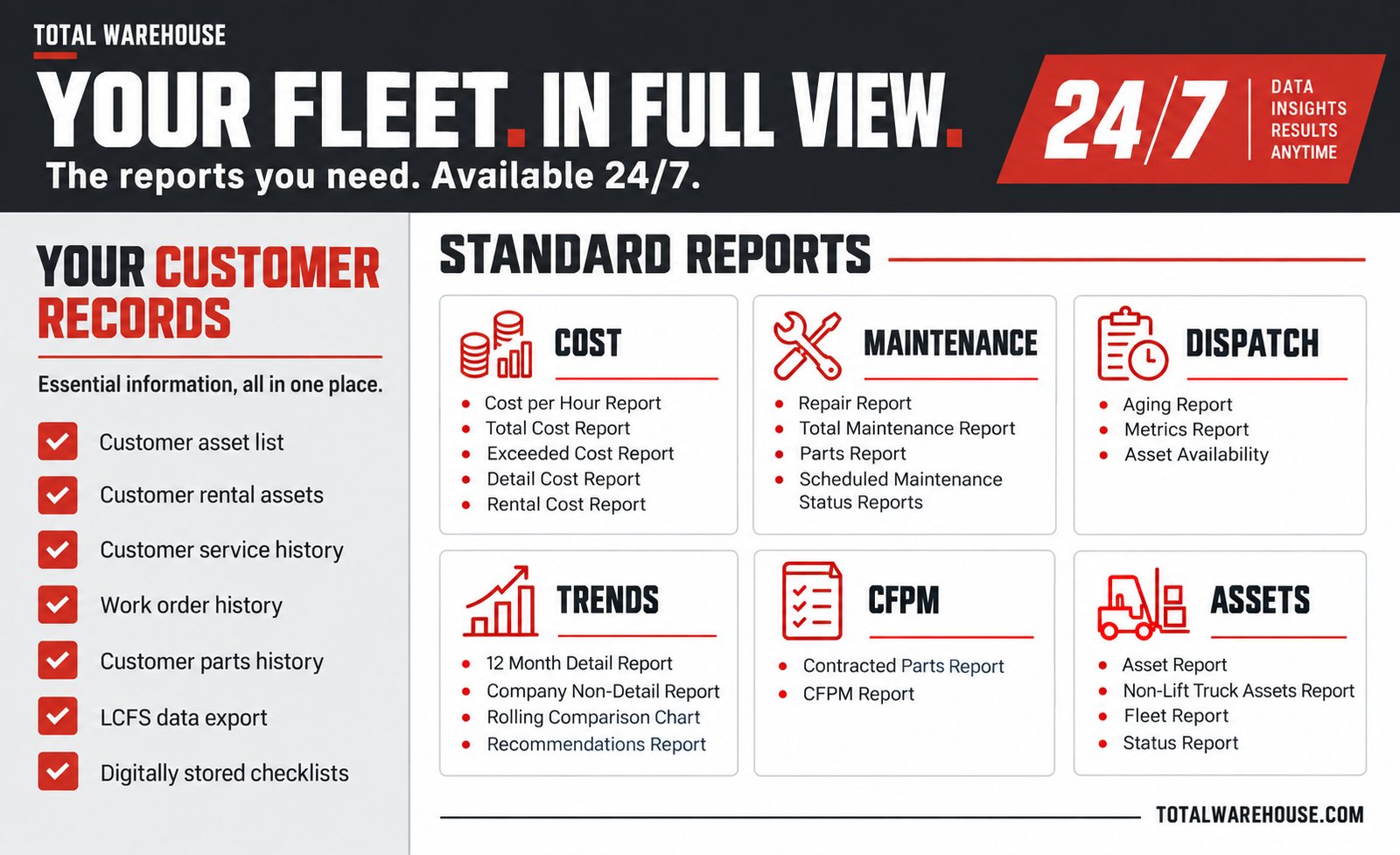
Consolidate asset records — One place for manuals, service logs, work orders, and related documentation.
Maximize uptime — Usage profiles by truck and operator reveal where availability is lost.
Optimize charging — Real cycle data supports better charging scenarios and comparisons across power technologies.
Reduce avoidable maintenance — Spot predictable issues before they become downtime.
Plan preventive maintenance — Build PM schedules from industry metrics and your own history—not gut feel alone.
Manage spare parts — Stock the right mix so you’re not waiting on parts or over-investing in inventory.
Promote safety — Data-backed training and compliance support fewer incidents and a safer floor.
Manage rental contracts — Track rental units, costs, durations, return dates, and issues to negotiate better terms.
Run quantitative fleet analytics — Real-time field data strengthens confident decisions.
Determine true TCO — Accurate ownership cost insight—most spend happens after purchase—supports smarter buy, lease, and replace choices.
Getting More From Your Fleet Data
Whether you are evaluating telematics, tightening PM discipline, or aligning truck data with broader asset management, the goal is the same: fewer surprises, more uptime, and clearer cost control across the fleet.
Work With Total Warehouse
Total Warehouse helps warehouses put tracking and fleet insight to work alongside the right equipment. We are proud dealers for Linde, Big Joe, UniCarriers, and Landoll. Call 833-868-2500 or contact us online to discuss telematics, fleet management, and the lift trucks that keep your operation moving.
Maximize Uptime. Minimize Costs.
Speak with our material handling experts today to find the perfect equipment and storage solutions for your facility.