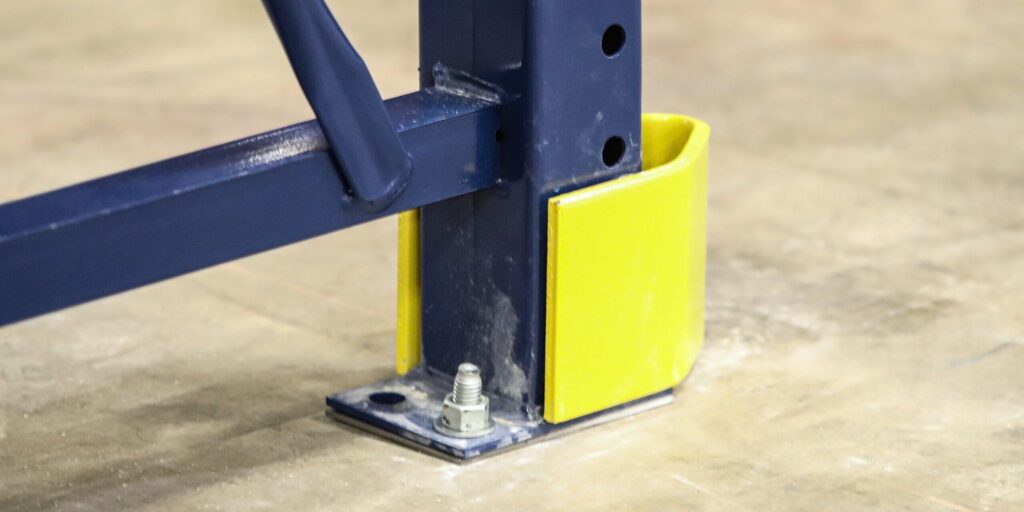

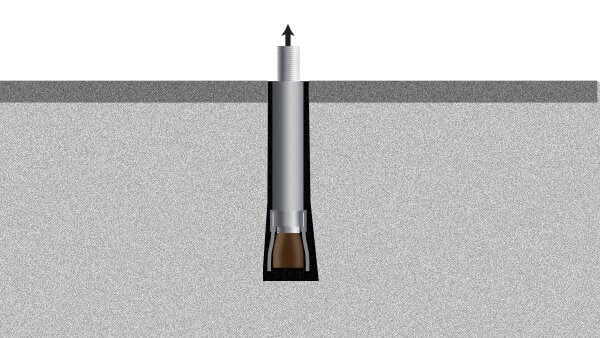
For most pallet rack installations, wedge anchors provide superior performance and reliability.
When properly installed, wedge anchors expand within the concrete slab and create a high-strength mechanical connection.
Benefits of Wedge Anchors
- High tension capacity
- High shear capacity
- Excellent seismic performance
- Suitable for high-traffic environments
- Can often be re-torqued after impact inspections
- Proven performance in engineered rack systems
Because of their strength and reliability, wedge anchors are commonly specified for industrial racking applications.
Why Strike Anchors Are Less Common in Modern Rack Installations
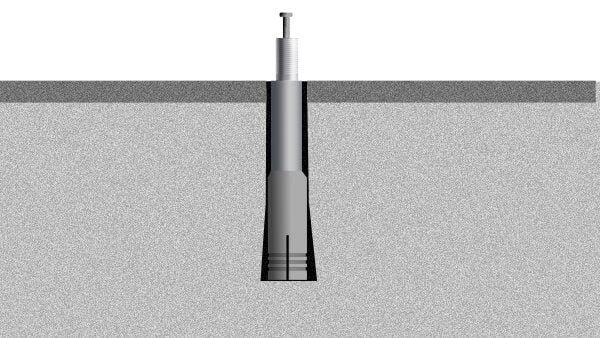
Strike anchors are sometimes used because they are relatively simple to install.
However, they generally provide:
- Lower pull-out strength
- Lower shear resistance
- Limited reusability
- Reduced performance in demanding environments
For facilities with high forklift traffic, heavy loads, or seismic considerations, stronger anchoring solutions are often preferred.
The Critical Role of Rack Baseplates
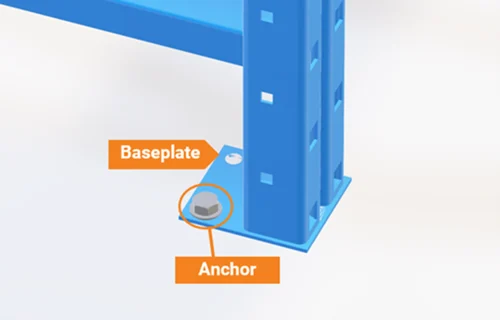
Anchors are only one part of the rack-to-floor connection.
The baseplate itself plays a significant role in distributing forces throughout the rack system.
Important considerations include:
Baseplate Thickness
Thicker plates provide greater resistance to impact and deformation.
Hole Configuration
Anchor spacing must match manufacturer specifications and engineering requirements.
Seismic Requirements
Many seismic applications require specialized baseplates and anchoring configurations.
Load Distribution
Proper baseplate design helps transfer forces safely into the concrete slab.
Even the strongest anchor cannot compensate for a damaged or improperly designed baseplate.
Seismic Rack Anchoring Considerations
For warehouses located in seismic regions, anchoring requirements often become more stringent.
Additional considerations may include:
- Engineered seismic calculations
- Larger anchor diameters
- Increased embedment depth
- Reinforced baseplates
- Special inspection requirements
- Compliance with local building codes
Facilities should always verify that rack systems meet applicable engineering and seismic requirements.
Frequently Asked Questions About Pallet Rack Anchors
How many anchors should each pallet rack upright have?
The required number depends on the rack manufacturer’s specifications, engineering requirements, and local code requirements. Always follow the approved rack design.
Can a pallet rack operate safely with a missing anchor?
No. Missing anchors can compromise rack stability and should be corrected immediately.
What causes pallet rack anchors to fail?
Common causes include forklift impacts, improper installation, concrete deterioration, seismic activity, and long-term wear.
How often should rack anchors be inspected?
Anchor inspections should be incorporated into routine rack safety inspections and reviewed whenever rack damage occurs.
Do seismic zones require different anchors?
Often, yes. Seismic applications may require specialized anchoring systems and engineering approval.
Free Rack Anchor Assessments from Total Warehouse
The integrity of your pallet racking system starts at ground level.
Anchors are a critical component of warehouse safety, and even seemingly minor issues can create significant risks if left unresolved.
As part of our complimentary rack assessment process, Total Warehouse evaluates:
- Anchor condition
- Anchor quantity and placement
- Baseplate integrity
- Rack alignment
- Rack-to-floor connection stability
- Signs of impact damage
- Overall rack system safety
If deficiencies are identified, our team provides practical recommendations for repair, reinforcement, or reconfiguration based on industry best practices and manufacturer requirements.
Complete Rack Repair and Safety Services
In addition to rack anchor evaluations, Total Warehouse supports facilities with:
- Rack inspections
- Rack repair programs
- Upright replacement
- Baseplate replacement
- Rack guard installation
- Column protection systems
- Rack re-leveling
- Warehouse safety assessments
- Rack system modifications
Whether you’re addressing visible damage, preparing for an audit, or proactively improving warehouse safety, our team can help ensure your pallet rack system remains safe, compliant, and operational.
Schedule Your Complimentary Rack Anchor Assessment
Small components can have a major impact on warehouse safety.
A damaged anchor, bent baseplate, or improperly secured upright can quickly become a larger structural concern if left unaddressed.
Contact Total Warehouse today to schedule a complimentary pallet rack anchor assessment and ensure your racking system remains safe, compliant, and built for long-term performance.
Call 833-868-2500 or contact our warehouse safety specialists to learn more.
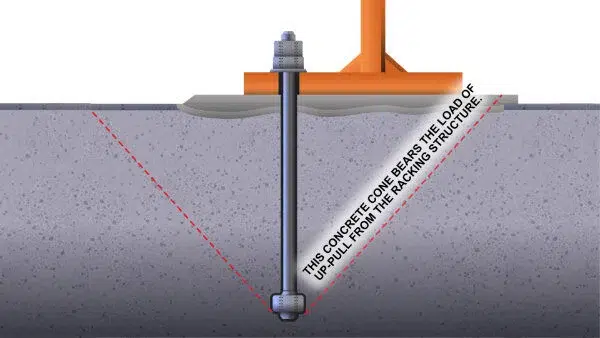
Rack anchors are designed to maintain the structural connection between the pallet rack system and the concrete slab.
They help resist:
- Forklift impacts
- Rack sway
- Uneven loading forces
- Seismic activity
- Structural movement over time
When anchors become damaged, loose, missing, or sheared off, the stability of the entire rack bay can be compromised.
Potential consequences include:
- Rack sway or misalignment
- Baseplate bending or tearing
- Upright column damage
- Progressive rack failure
- Bay spreading in drive-in systems
- Increased risk of collapse
- Serious safety hazards for warehouse personnel
The risk is especially significant in high-traffic warehouse areas where forklifts frequently interact with racking systems.
Common Causes of Rack Anchor Failure
While anchors are designed for long-term performance, several factors can contribute to failure.
Forklift Impacts
Direct contact with rack uprights or baseplates can loosen anchors or damage surrounding concrete.
Poor Installation
Improper torque, incorrect embedment depth, or inadequate anchor spacing can reduce holding strength.
Concrete Deterioration
Cracked or deteriorating concrete may compromise anchor performance.
Seismic Activity
In seismic regions, anchors experience additional loading forces that may accelerate wear or failure.
Rack Modifications
Changes to rack configuration, load profiles, or system design may require reevaluation of anchoring requirements.
Signs Your Anchors May Need Inspection or Repair
Regular rack inspections should include a close review of all anchor points.
Watch for:
✅ Missing anchors
✅ Loose anchors
✅ Sheared or broken anchor bolts
✅ Cracked concrete around anchor locations
✅ Bent, torn, or twisted baseplates
✅ Uprights pulling away from the floor
✅ Rack frames that appear out of plumb
Any of these conditions should be investigated immediately.
According to ANSI MH16.1 guidance, visibly damaged rack components and compromised anchoring conditions require corrective action before continued operation.
Choosing the Right Anchors for Your Pallet Rack System
Not all anchors provide the same level of performance.
Anchor selection should be based on:
- Rack design
- Load requirements
- Concrete thickness
- Seismic requirements
- Local building codes
- Manufacturer specifications
At Total Warehouse, we evaluate these factors when recommending anchoring solutions for warehouse environments throughout the United States.
Why Wedge Anchors Are Often the Preferred Choice
Why Wedge Anchors Are Often the Preferred Choice
For most pallet rack installations, wedge anchors provide superior performance and reliability.
When properly installed, wedge anchors expand within the concrete slab and create a high-strength mechanical connection.
Benefits of Wedge Anchors
- High tension capacity
- High shear capacity
- Excellent seismic performance
- Suitable for high-traffic environments
- Can often be re-torqued after impact inspections
- Proven performance in engineered rack systems
Because of their strength and reliability, wedge anchors are commonly specified for industrial racking applications.
Why Strike Anchors Are Less Common in Modern Rack Installations
Strike anchors are sometimes used because they are relatively simple to install.
However, they generally provide:
- Lower pull-out strength
- Lower shear resistance
- Limited reusability
- Reduced performance in demanding environments
For facilities with high forklift traffic, heavy loads, or seismic considerations, stronger anchoring solutions are often preferred.
The Critical Role of Rack Baseplates
Anchors are only one part of the rack-to-floor connection.
The baseplate itself plays a significant role in distributing forces throughout the rack system.
Important considerations include:
Baseplate Thickness
Thicker plates provide greater resistance to impact and deformation.
Hole Configuration
Anchor spacing must match manufacturer specifications and engineering requirements.
Seismic Requirements
Many seismic applications require specialized baseplates and anchoring configurations.
Load Distribution
Proper baseplate design helps transfer forces safely into the concrete slab.
Even the strongest anchor cannot compensate for a damaged or improperly designed baseplate.
Seismic Rack Anchoring Considerations
For warehouses located in seismic regions, anchoring requirements often become more stringent.
Additional considerations may include:
- Engineered seismic calculations
- Larger anchor diameters
- Increased embedment depth
- Reinforced baseplates
- Special inspection requirements
- Compliance with local building codes
Facilities should always verify that rack systems meet applicable engineering and seismic requirements.
Frequently Asked Questions About Pallet Rack Anchors
How many anchors should each pallet rack upright have?
The required number depends on the rack manufacturer’s specifications, engineering requirements, and local code requirements. Always follow the approved rack design.
Can a pallet rack operate safely with a missing anchor?
No. Missing anchors can compromise rack stability and should be corrected immediately.
What causes pallet rack anchors to fail?
Common causes include forklift impacts, improper installation, concrete deterioration, seismic activity, and long-term wear.
How often should rack anchors be inspected?
Anchor inspections should be incorporated into routine rack safety inspections and reviewed whenever rack damage occurs.
Do seismic zones require different anchors?
Often, yes. Seismic applications may require specialized anchoring systems and engineering approval.
Free Rack Anchor Assessments from Total Warehouse
The integrity of your pallet racking system starts at ground level.
Anchors are a critical component of warehouse safety, and even seemingly minor issues can create significant risks if left unresolved.
As part of our complimentary rack assessment process, Total Warehouse evaluates:
- Anchor condition
- Anchor quantity and placement
- Baseplate integrity
- Rack alignment
- Rack-to-floor connection stability
- Signs of impact damage
- Overall rack system safety
If deficiencies are identified, our team provides practical recommendations for repair, reinforcement, or reconfiguration based on industry best practices and manufacturer requirements.
Complete Rack Repair and Safety Services
In addition to rack anchor evaluations, Total Warehouse supports facilities with:
- Rack inspections
- Rack repair programs
- Upright replacement
- Baseplate replacement
- Rack guard installation
- Column protection systems
- Rack re-leveling
- Warehouse safety assessments
- Rack system modifications
Whether you’re addressing visible damage, preparing for an audit, or proactively improving warehouse safety, our team can help ensure your pallet rack system remains safe, compliant, and operational.
Schedule Your Complimentary Rack Anchor Assessment
Small components can have a major impact on warehouse safety.
A damaged anchor, bent baseplate, or improperly secured upright can quickly become a larger structural concern if left unaddressed.
Contact Total Warehouse today to schedule a complimentary pallet rack anchor assessment and ensure your racking system remains safe, compliant, and built for long-term performance.
Call 833-868-2500 or contact our warehouse safety specialists to learn more.
Pallet Rack Anchors: Why They Matter for Warehouse Safety and Rack Compliance
Pallet rack anchors may be small, but they’re one of the most important components of any warehouse racking system.
Anchors secure the baseplate of each rack upright to the concrete floor, helping stabilize the entire structure and prevent movement under load. Without proper anchoring, even a well-designed pallet rack system can become vulnerable to impact damage, shifting, instability, and potential collapse.
At Total Warehouse, we emphasize proper rack anchoring as a critical part of warehouse safety, compliance, and long-term rack performance. Whether you’re installing new pallet racking or evaluating an existing system, anchor integrity should always be part of your inspection process.
Why Anchor Condition Matters
Rack anchors are designed to maintain the structural connection between the pallet rack system and the concrete slab.
They help resist:
- Forklift impacts
- Rack sway
- Uneven loading forces
- Seismic activity
- Structural movement over time
When anchors become damaged, loose, missing, or sheared off, the stability of the entire rack bay can be compromised.
Potential consequences include:
- Rack sway or misalignment
- Baseplate bending or tearing
- Upright column damage
- Progressive rack failure
- Bay spreading in drive-in systems
- Increased risk of collapse
- Serious safety hazards for warehouse personnel
The risk is especially significant in high-traffic warehouse areas where forklifts frequently interact with racking systems.
Common Causes of Rack Anchor Failure
While anchors are designed for long-term performance, several factors can contribute to failure.
Forklift Impacts
Direct contact with rack uprights or baseplates can loosen anchors or damage surrounding concrete.
Poor Installation
Improper torque, incorrect embedment depth, or inadequate anchor spacing can reduce holding strength.
Concrete Deterioration
Cracked or deteriorating concrete may compromise anchor performance.
Seismic Activity
In seismic regions, anchors experience additional loading forces that may accelerate wear or failure.
Rack Modifications
Changes to rack configuration, load profiles, or system design may require reevaluation of anchoring requirements.
Signs Your Anchors May Need Inspection or Repair
Regular rack inspections should include a close review of all anchor points.
Watch for:
✅ Missing anchors
✅ Loose anchors
✅ Sheared or broken anchor bolts
✅ Cracked concrete around anchor locations
✅ Bent, torn, or twisted baseplates
✅ Uprights pulling away from the floor
✅ Rack frames that appear out of plumb
Any of these conditions should be investigated immediately.
According to ANSI MH16.1 guidance, visibly damaged rack components and compromised anchoring conditions require corrective action before continued operation.
Choosing the Right Anchors for Your Pallet Rack System
Not all anchors provide the same level of performance.
Anchor selection should be based on:
- Rack design
- Load requirements
- Concrete thickness
- Seismic requirements
- Local building codes
- Manufacturer specifications
At Total Warehouse, we evaluate these factors when recommending anchoring solutions for warehouse environments throughout the United States.
Why Wedge Anchors Are Often the Preferred Choice
Why Wedge Anchors Are Often the Preferred Choice
For most pallet rack installations, wedge anchors provide superior performance and reliability.
When properly installed, wedge anchors expand within the concrete slab and create a high-strength mechanical connection.
Benefits of Wedge Anchors
- High tension capacity
- High shear capacity
- Excellent seismic performance
- Suitable for high-traffic environments
- Can often be re-torqued after impact inspections
- Proven performance in engineered rack systems
Because of their strength and reliability, wedge anchors are commonly specified for industrial racking applications.
Why Strike Anchors Are Less Common in Modern Rack Installations
Strike anchors are sometimes used because they are relatively simple to install.
However, they generally provide:
- Lower pull-out strength
- Lower shear resistance
- Limited reusability
- Reduced performance in demanding environments
For facilities with high forklift traffic, heavy loads, or seismic considerations, stronger anchoring solutions are often preferred.
The Critical Role of Rack Baseplates
Anchors are only one part of the rack-to-floor connection.
The baseplate itself plays a significant role in distributing forces throughout the rack system.
Important considerations include:
Baseplate Thickness
Thicker plates provide greater resistance to impact and deformation.
Hole Configuration
Anchor spacing must match manufacturer specifications and engineering requirements.
Seismic Requirements
Many seismic applications require specialized baseplates and anchoring configurations.
Load Distribution
Proper baseplate design helps transfer forces safely into the concrete slab.
Even the strongest anchor cannot compensate for a damaged or improperly designed baseplate.
Seismic Rack Anchoring Considerations
For warehouses located in seismic regions, anchoring requirements often become more stringent.
Additional considerations may include:
- Engineered seismic calculations
- Larger anchor diameters
- Increased embedment depth
- Reinforced baseplates
- Special inspection requirements
- Compliance with local building codes
Facilities should always verify that rack systems meet applicable engineering and seismic requirements.
Frequently Asked Questions About Pallet Rack Anchors
How many anchors should each pallet rack upright have?
The required number depends on the rack manufacturer’s specifications, engineering requirements, and local code requirements. Always follow the approved rack design.
Can a pallet rack operate safely with a missing anchor?
No. Missing anchors can compromise rack stability and should be corrected immediately.
What causes pallet rack anchors to fail?
Common causes include forklift impacts, improper installation, concrete deterioration, seismic activity, and long-term wear.
How often should rack anchors be inspected?
Anchor inspections should be incorporated into routine rack safety inspections and reviewed whenever rack damage occurs.
Do seismic zones require different anchors?
Often, yes. Seismic applications may require specialized anchoring systems and engineering approval.
Free Rack Anchor Assessments from Total Warehouse
The integrity of your pallet racking system starts at ground level.
Anchors are a critical component of warehouse safety, and even seemingly minor issues can create significant risks if left unresolved.
As part of our complimentary rack assessment process, Total Warehouse evaluates:
- Anchor condition
- Anchor quantity and placement
- Baseplate integrity
- Rack alignment
- Rack-to-floor connection stability
- Signs of impact damage
- Overall rack system safety
If deficiencies are identified, our team provides practical recommendations for repair, reinforcement, or reconfiguration based on industry best practices and manufacturer requirements.
Complete Rack Repair and Safety Services
In addition to rack anchor evaluations, Total Warehouse supports facilities with:
- Rack inspections
- Rack repair programs
- Upright replacement
- Baseplate replacement
- Rack guard installation
- Column protection systems
- Rack re-leveling
- Warehouse safety assessments
- Rack system modifications
Whether you’re addressing visible damage, preparing for an audit, or proactively improving warehouse safety, our team can help ensure your pallet rack system remains safe, compliant, and operational.
Schedule Your Complimentary Rack Anchor Assessment
Small components can have a major impact on warehouse safety.
A damaged anchor, bent baseplate, or improperly secured upright can quickly become a larger structural concern if left unaddressed.
Contact Total Warehouse today to schedule a complimentary pallet rack anchor assessment and ensure your racking system remains safe, compliant, and built for long-term performance.
Call 833-868-2500 or contact our warehouse safety specialists to learn more.
*Last Updated: Sept. 2026*
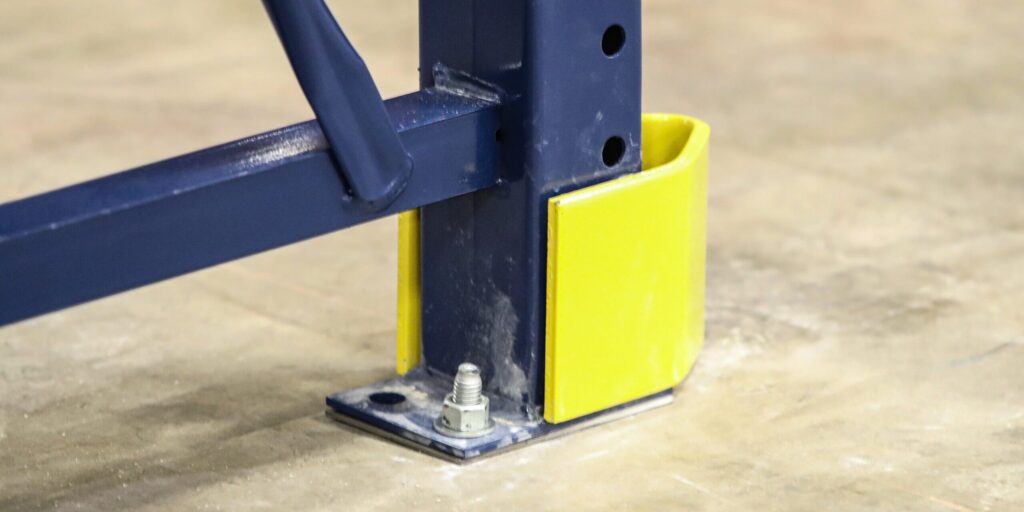
Pallet Rack Anchors: Why They Matter for Warehouse Safety and Rack Compliance
Pallet rack anchors may be small, but they’re one of the most important components of any warehouse racking system.
Anchors secure the baseplate of each rack upright to the concrete floor, helping stabilize the entire structure and prevent movement under load. Without proper anchoring, even a well-designed pallet rack system can become vulnerable to impact damage, shifting, instability, and potential collapse.
At Total Warehouse, we emphasize proper rack anchoring as a critical part of warehouse safety, compliance, and long-term rack performance. Whether you’re installing new pallet racking or evaluating an existing system, anchor integrity should always be part of your inspection process.
Why Anchor Condition Matters
Rack anchors are designed to maintain the structural connection between the pallet rack system and the concrete slab.
They help resist:
- Forklift impacts
- Rack sway
- Uneven loading forces
- Seismic activity
- Structural movement over time
When anchors become damaged, loose, missing, or sheared off, the stability of the entire rack bay can be compromised.
Potential consequences include:
- Rack sway or misalignment
- Baseplate bending or tearing
- Upright column damage
- Progressive rack failure
- Bay spreading in drive-in systems
- Increased risk of collapse
- Serious safety hazards for warehouse personnel
The risk is especially significant in high-traffic warehouse areas where forklifts frequently interact with racking systems.
Common Causes of Rack Anchor Failure
While anchors are designed for long-term performance, several factors can contribute to failure.
Forklift Impacts
Direct contact with rack uprights or baseplates can loosen anchors or damage surrounding concrete.
Poor Installation
Improper torque, incorrect embedment depth, or inadequate anchor spacing can reduce holding strength.
Concrete Deterioration
Cracked or deteriorating concrete may compromise anchor performance.
Seismic Activity
In seismic regions, anchors experience additional loading forces that may accelerate wear or failure.
Rack Modifications
Changes to rack configuration, load profiles, or system design may require reevaluation of anchoring requirements.
Signs Your Anchors May Need Inspection or Repair
Regular rack inspections should include a close review of all anchor points.
Watch for:
✅ Missing anchors
✅ Loose anchors
✅ Sheared or broken anchor bolts
✅ Cracked concrete around anchor locations
✅ Bent, torn, or twisted baseplates
✅ Uprights pulling away from the floor
✅ Rack frames that appear out of plumb
Any of these conditions should be investigated immediately.
According to ANSI MH16.1 guidance, visibly damaged rack components and compromised anchoring conditions require corrective action before continued operation.
Choosing the Right Anchors for Your Pallet Rack System
Not all anchors provide the same level of performance.
Anchor selection should be based on:
- Rack design
- Load requirements
- Concrete thickness
- Seismic requirements
- Local building codes
- Manufacturer specifications
At Total Warehouse, we evaluate these factors when recommending anchoring solutions for warehouse environments throughout the United States.
Why Wedge Anchors Are Often the Preferred Choice
Why Wedge Anchors Are Often the Preferred Choice
For most pallet rack installations, wedge anchors provide superior performance and reliability.
When properly installed, wedge anchors expand within the concrete slab and create a high-strength mechanical connection.
Benefits of Wedge Anchors
- High tension capacity
- High shear capacity
- Excellent seismic performance
- Suitable for high-traffic environments
- Can often be re-torqued after impact inspections
- Proven performance in engineered rack systems
Because of their strength and reliability, wedge anchors are commonly specified for industrial racking applications.
Why Strike Anchors Are Less Common in Modern Rack Installations
Strike anchors are sometimes used because they are relatively simple to install.
However, they generally provide:
- Lower pull-out strength
- Lower shear resistance
- Limited reusability
- Reduced performance in demanding environments
For facilities with high forklift traffic, heavy loads, or seismic considerations, stronger anchoring solutions are often preferred.
The Critical Role of Rack Baseplates
Anchors are only one part of the rack-to-floor connection.
The baseplate itself plays a significant role in distributing forces throughout the rack system.
Important considerations include:
Baseplate Thickness
Thicker plates provide greater resistance to impact and deformation.
Hole Configuration
Anchor spacing must match manufacturer specifications and engineering requirements.
Seismic Requirements
Many seismic applications require specialized baseplates and anchoring configurations.
Load Distribution
Proper baseplate design helps transfer forces safely into the concrete slab.
Even the strongest anchor cannot compensate for a damaged or improperly designed baseplate.
Seismic Rack Anchoring Considerations
For warehouses located in seismic regions, anchoring requirements often become more stringent.
Additional considerations may include:
- Engineered seismic calculations
- Larger anchor diameters
- Increased embedment depth
- Reinforced baseplates
- Special inspection requirements
- Compliance with local building codes
Facilities should always verify that rack systems meet applicable engineering and seismic requirements.
Frequently Asked Questions About Pallet Rack Anchors
How many anchors should each pallet rack upright have?
The required number depends on the rack manufacturer’s specifications, engineering requirements, and local code requirements. Always follow the approved rack design.
Can a pallet rack operate safely with a missing anchor?
No. Missing anchors can compromise rack stability and should be corrected immediately.
What causes pallet rack anchors to fail?
Common causes include forklift impacts, improper installation, concrete deterioration, seismic activity, and long-term wear.
How often should rack anchors be inspected?
Anchor inspections should be incorporated into routine rack safety inspections and reviewed whenever rack damage occurs.
Do seismic zones require different anchors?
Often, yes. Seismic applications may require specialized anchoring systems and engineering approval.
Free Rack Anchor Assessments from Total Warehouse
The integrity of your pallet racking system starts at ground level.
Anchors are a critical component of warehouse safety, and even seemingly minor issues can create significant risks if left unresolved.
As part of our complimentary rack assessment process, Total Warehouse evaluates:
- Anchor condition
- Anchor quantity and placement
- Baseplate integrity
- Rack alignment
- Rack-to-floor connection stability
- Signs of impact damage
- Overall rack system safety
If deficiencies are identified, our team provides practical recommendations for repair, reinforcement, or reconfiguration based on industry best practices and manufacturer requirements.
Complete Rack Repair and Safety Services
In addition to rack anchor evaluations, Total Warehouse supports facilities with:
- Rack inspections
- Rack repair programs
- Upright replacement
- Baseplate replacement
- Rack guard installation
- Column protection systems
- Rack re-leveling
- Warehouse safety assessments
- Rack system modifications
Whether you’re addressing visible damage, preparing for an audit, or proactively improving warehouse safety, our team can help ensure your pallet rack system remains safe, compliant, and operational.
Schedule Your Complimentary Rack Anchor Assessment
Small components can have a major impact on warehouse safety.
A damaged anchor, bent baseplate, or improperly secured upright can quickly become a larger structural concern if left unaddressed.
Contact Total Warehouse today to schedule a complimentary pallet rack anchor assessment and ensure your racking system remains safe, compliant, and built for long-term performance.
Call 833-868-2500 or contact our warehouse safety specialists to learn more.